Riley Super Skyrocket P337
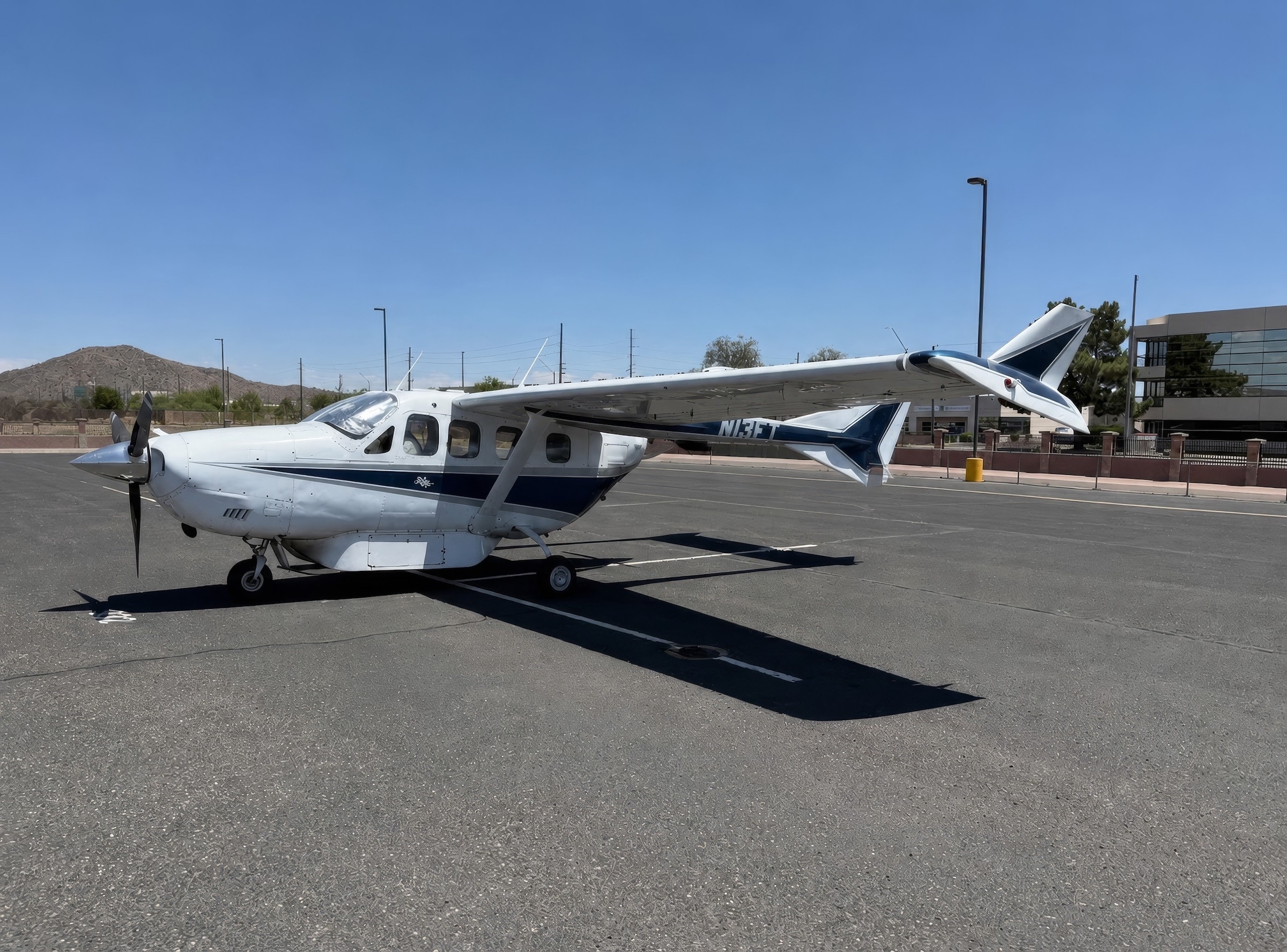
The Riley Super Skyrocket P337 is a pressurized, twin-engine piston aircraft based on the Cessna P337 Skymaster. Its unique centerline-thrust design places one engine in the nose and one engine behind the cabin, giving the aircraft twin-engine redundancy without the severe asymmetric thrust characteristics found in conventional twins.
The Riley conversion transforms the already-capable pressurized Skymaster into a faster, stronger, higher-performance aircraft. With increased horsepower, improved climb performance, and excellent high-altitude capability, the Super Skyrocket is a practical platform for ministry, humanitarian, medical, and rapid-response missions.
General Description
The Cessna P337 is the pressurized version of the Cessna 337 Skymaster, one of the most distinctive twin-engine aircraft ever produced. Unlike traditional twins with engines mounted on the wings, the Skymaster uses a push-pull configuration with both engines aligned along the aircraft centerline.
This design gives the aircraft excellent engine-out handling. If one engine fails, the aircraft does not produce the same strong yawing tendency common in conventional twin-engine aircraft. For mission aviation, that provides an important safety advantage, especially when operating into smaller airports or challenging environments.
The Riley Super Skyrocket conversion adds larger turbocharged Continental engines, three-blade propellers, and numerous performance improvements. The result is a pressurized, high-performance piston twin with speed, range, climb capability, and operational flexibility well suited to Judah 1’s mission profile.

Technical Specifications
(Values may vary by aircraft, year, equipment, and Riley conversion configuration; specs below represent typical Riley Super Skyrocket P337 performance.)
Performance
- Cruise Speed: ~210–230 knots
- Maximum Speed: up to ~250–260 knots
- Range: ~800–1,000 nautical miles
- Service Ceiling: ~20,000–25,000 feet
- Rate of Climb: up to ~2,500 ft/min
- Takeoff Distance: ~1,400–1,600 ft over 50 ft obstacle
- Landing Distance: ~1,400–1,700 ft over 50 ft obstacle
Cabin
- Pressurized cabin
- Centerline-thrust twin-engine design
- Typical seating: 1 pilot + 4 to 5 passengers
- Excellent visibility from large cabin windows
- Compact cabin suitable for personnel transport, light cargo, and limited medical support
- Rear seats may be removed for additional mission cargo flexibility
Power Plant
- Engines: 2 × Continental TSIO-520 series engines
- Horsepower: approximately 300–310 HP each
- Total Horsepower: approximately 600–620 HP
- Configuration: Push-pull centerline thrust
- Features: Turbocharged engines for high-altitude performance
- Propellers: Three-blade propellers on Riley Super Skyrocket conversions
Airframe
- Wingspan: ~38 ft
- Length: ~29 ft 9 in
- Height: ~9 ft 4 in
- Landing Gear: Retractable tricycle gear
- Aircraft Type: Pressurized centerline-thrust piston twin
- Base Aircraft: Cessna P337 Skymaster
Weights & Capacities
- Max Takeoff Weight: approximately 4,700 lbs
- Useful Load: varies by aircraft and equipment
- Fuel Capacity: commonly 123–150 gallons depending on configuration
- Typical Seating: 1 pilot + 4 to 5 passengers
- Payload with Full Fuel: varies significantly by aircraft configuration
Notable Modifications
- Riley Super Skyrocket performance conversion
- Larger turbocharged Continental engines
- Three-blade propellers
- Increased climb performance
- Improved high-altitude cruise performance
- Pressurization system
- Centerline-thrust safety advantage
- Potential STOL and avionics upgrades depending on aircraft configuration
Benefits of the Riley Super Skyrocket P337
The Riley Super Skyrocket P337 is an excellent mission aircraft for operations requiring speed, safety, and flexibility without moving into turbine-class cost. It gives Judah 1 a pressurized twin-engine platform that can move people and priority supplies quickly while still operating into smaller regional airports.
Personnel Transport for Ministry Teams
The Riley Super Skyrocket P337 is an excellent mission aircraft for operations requiring speed, safety, and flexibility without moving into turbine-class cost. It gives Judah 1 a pressurized twin-engine platform that can move people and priority supplies quickly while still operating into smaller regional airports.
- Move small mission teams efficiently.
- Transport ministry leaders and medical personnel.
- Support scouting and pre-deployment trips.
- Provide connection flights between larger airports and smaller regional airfields.
- Serve missions where speed matters but a larger aircraft is unnecessary.
With cruise speeds above 200 knots, the Super Skyrocket can cover regional distances much faster than many single-engine mission aircraft while offering the added confidence of twin-engine redundancy.
Disaster Response and Rapid Deployment
The Super Skyrocket’s pressurization, turbocharged engines, and strong climb performance make it useful for rapid-response missions. It can:
- Move assessment teams into disaster areas quickly.
- Deliver urgent supplies such as medical kits, communications equipment, water filters, and small relief cargo.
- Operate into smaller airports closer to affected communities.
- Fly above much of the weather and turbulence that can slow lower-performance aircraft.
- Support reconnaissance flights after floods, hurricanes, tornadoes, wildfires, or other emergencies.
Its speed and smaller operating footprint make it a practical first-response aircraft before larger cargo or passenger operations are required.
Medical and Patient Transport
The P337 can support limited medical transport missions when configured appropriately. While smaller than cabin-class twins such as the Cessna 414, it can be useful for:
- Patient transport where airline travel is impractical.
- Moving medical personnel to and from remote communities.
- Transporting critical medical supplies.
- Supporting urgent travel for patients and families.
Its pressurized cabin helps provide a more stable environment on longer flights and allows the aircraft to operate above lower-level turbulence and weather.
Cargo and Supply Distribution
With passenger seats removed or reconfigured, the Super Skyrocket can carry light mission cargo and priority supplies. It is suitable for:
- Medical kits and supplies.
- Water purification equipment.
- Communications gear.
- Small tools and parts.
- Bibles and ministry materials.
- Emergency food and relief supplies.
The aircraft is not a large cargo hauler, but it is highly useful when speed, range, and access to smaller airports are more important than bulk payload.
Financial and Operational Efficiency
Compared to turbine aircraft, the Riley Super Skyrocket offers:
- Lower operating cost than most turboprops.
- Twin-engine redundancy in a piston aircraft.
- Single-pilot operation when regulations allow.
- Strong speed and climb performance for its class.
- Access to smaller airports and regional airfields.
- Practical use for donor flights, scouting trips, urgent ministry travel, and light relief missions.
For Judah 1, the Super Skyrocket fills an important role between single-engine utility aircraft and larger cabin-class or turbine aircraft.
Mission Role
The Riley Super Skyrocket P337 gives Judah 1 a fast, pressurized, centerline-thrust twin for regional missions, ministry transportation, disaster response, medical support, and light cargo operations. Its unique push-pull design, strong Riley performance conversion, and efficient operating profile make it a valuable aircraft for missions where speed, safety, and flexibility are essential.